A Parent's Room-by-Room Safe Sleep Setup Checklist
A safe sleep review is an equipment and caregiver check, not a room-decorating exercise. Work through the places where your baby may sleep and the adults who may put them down. The checklist summarizes selected AAP principles while directing you to the complete current policy explanation. It cannot guarantee that a sleep-related death will be prevented.
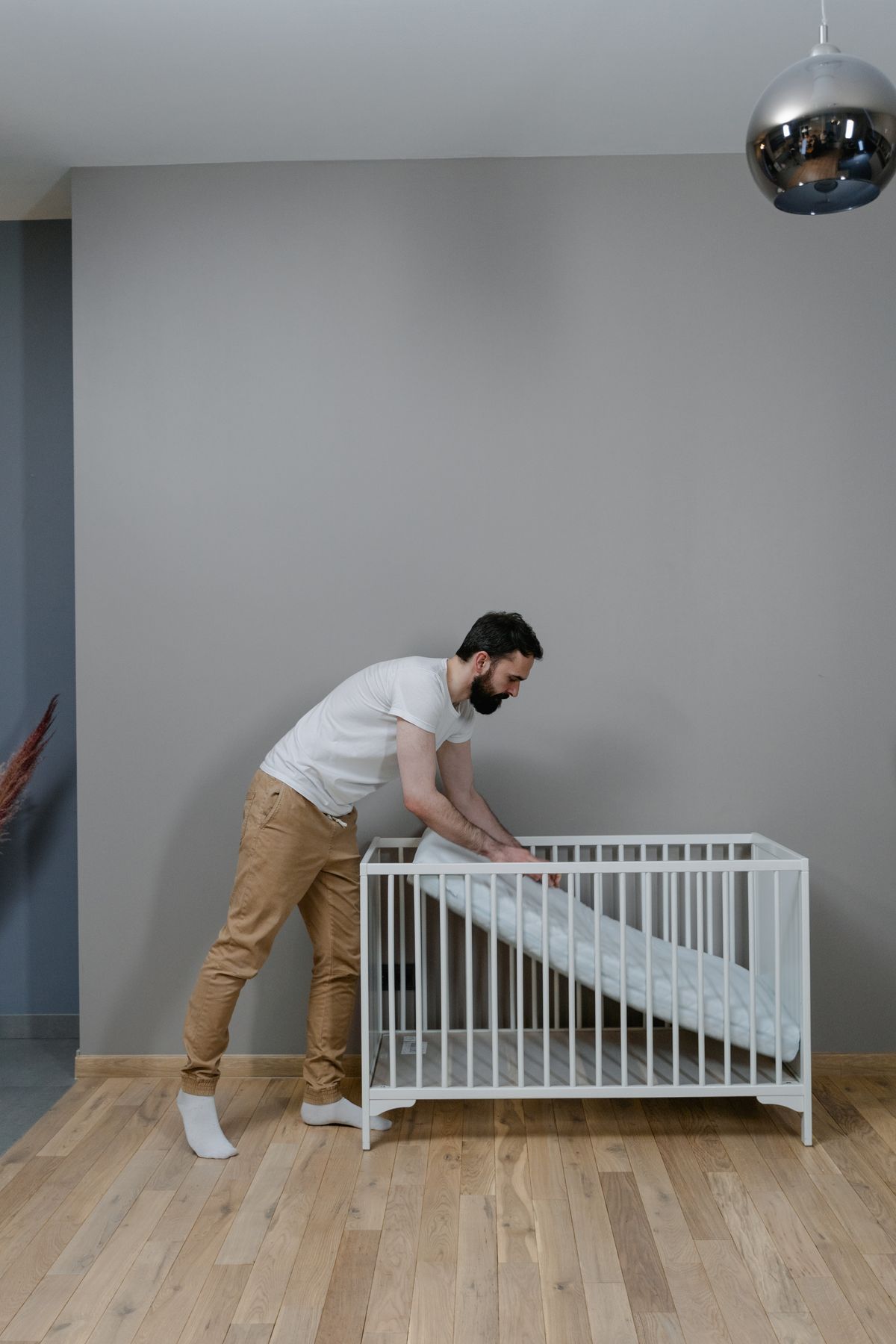
Photo: Pexels · Pexels License. Nursery preparation photograph. See the guide checklist for the completed sleep-space requirements. Display may crop the original.
List every proposed sleep location
Write down the regular bedroom, a relative’s home and any travel accommodation you expect to use. Include products relatives have already offered. Do not assume that a product suitable for supervised awake time is intended for infant sleep. Beside each location, record the actual product name and where its instructions are kept. An unknown item is something to verify before use, not a gap to fill with a folded blanket or an improvised cushion.
Inspect the product before the room
Confirm that the crib, bassinet, portable crib or play yard meets applicable safety requirements, is not recalled and has all required parts. Use the mattress intended for that exact product. A secondhand item without instructions or complete hardware needs verification rather than a guess about assembly. Keep a note of the model identification so a future recall check does not depend on finding a faded label while preparing for a visit.
Keep the surface clear and flat
AAP recommends placing babies on their backs for sleep on a firm, flat surface, using a fitted sheet without pillows, bumpers, blankets, toys or positioners. A pleasing photograph is not proof that a pictured setup follows that advice. Walk around the assembled product and look for objects someone has added to make it seem cozy. Move them to an adult storage area. Avoid using an extra mattress or padding to alter the product’s designed surface.
Plan the adult sleeping arrangement
AAP recommends room sharing without bed sharing for at least the first six months. Arrange adult access so the baby can be returned to their own sleep area after feeding or comforting. Keep the route clear and discuss fatigue before it becomes an urgent problem. Do not treat a sofa or soft armchair as a safer place to fall asleep with a baby. If a caregiver is struggling to stay awake, a clear handoff plan matters more than finishing a household chore.
Make the same plan usable by visitors
Give an authorized caregiver the product instructions and show them the setup before the care period begins. Ask them to describe where they will place the baby and what belongs in that space. Explain the plan in direct terms rather than relying on a note that says sleep safely. Relatives may remember older advice. You can respectfully state the current household plan without inviting a debate while a tired baby waits to be settled.
Check the away-from-home arrangement early
Contact a host or accommodation before departure to confirm what is actually supplied. A promise of baby equipment may refer to a feeding chair or a product that does not meet your needs. If bringing your own travel sleep product, inspect and assemble it in advance. Pack the specified sheet separately from adult bedding. Do not arrive assuming you can create an equivalent sleep setup from sofa cushions, an adult bed or a soft travel bag.
Separate awake activities from sleeping
A product used for transport or supervised awake time may not be a routine sleep destination. AAP advises moving a baby who falls asleep in a car seat, stroller, swing or carrier to a suitable firm sleep surface on their back as soon as possible. Plan the destination before the outing. Avoid adding accessories to change a product’s purpose. If you have questions specific to a baby’s condition or equipment, raise them with the pediatric care team.
Make the review repeatable
Create one short list: product checked, surface clear, room arrangement ready, caregiver informed and travel alternative confirmed. Revisit it when the baby’s mobility changes, when switching products or before an overnight visit. Follow the manufacturer’s limits rather than waiting for a birthday to make adjustments. Keep the full AAP reference available because this organization guide does not cover every situation, such as swaddling decisions or an individual baby’s medical needs.
Your working checklist
Checkmarks stay in this browser when storage is available. They do not submit information or complete a purchase.
Put it into practice
- List all home and away sleep locations before buying extra equipment.
- Identify each product and check instructions, completeness and recall status.
- Remove loose bedding, soft objects and unapproved extra padding.
- Place the regular sleep area where room sharing is practical.
- Show every caregiver the intended setup before their first care period.
- Confirm travel equipment rather than relying on a generic promise.
- Review the full AAP guidance and discuss baby-specific questions with a clinician.
Before you finish
- No stored objects need to be removed before the baby can be put down.
- The chosen mattress and sheet fit the actual product.
- Travel and visiting caregivers know the same plan.
- Changes in mobility trigger a review of the product instructions.
Common questions
Does this checklist cover every safe sleep issue?
No. It selects core setup principles and practical checks. Read the full linked AAP explanation and ask your pediatric team about your baby’s individual circumstances.
Is a decorated nursery photo a reliable model?
No. Photographs may show styling rather than an appropriate sleeping arrangement. Check the real product, mattress, surface and contents against current guidance.
Can a monitor replace these steps?
A monitor is not a substitute for the recommended sleep environment. Do not assume that a consumer device makes an otherwise unsuitable surface or added bedding safe.
What should I do with a borrowed sleep product?
Get its identifying information, complete instructions and all required parts, and check its status before use. If its suitability cannot be established, arrange another appropriate product.